
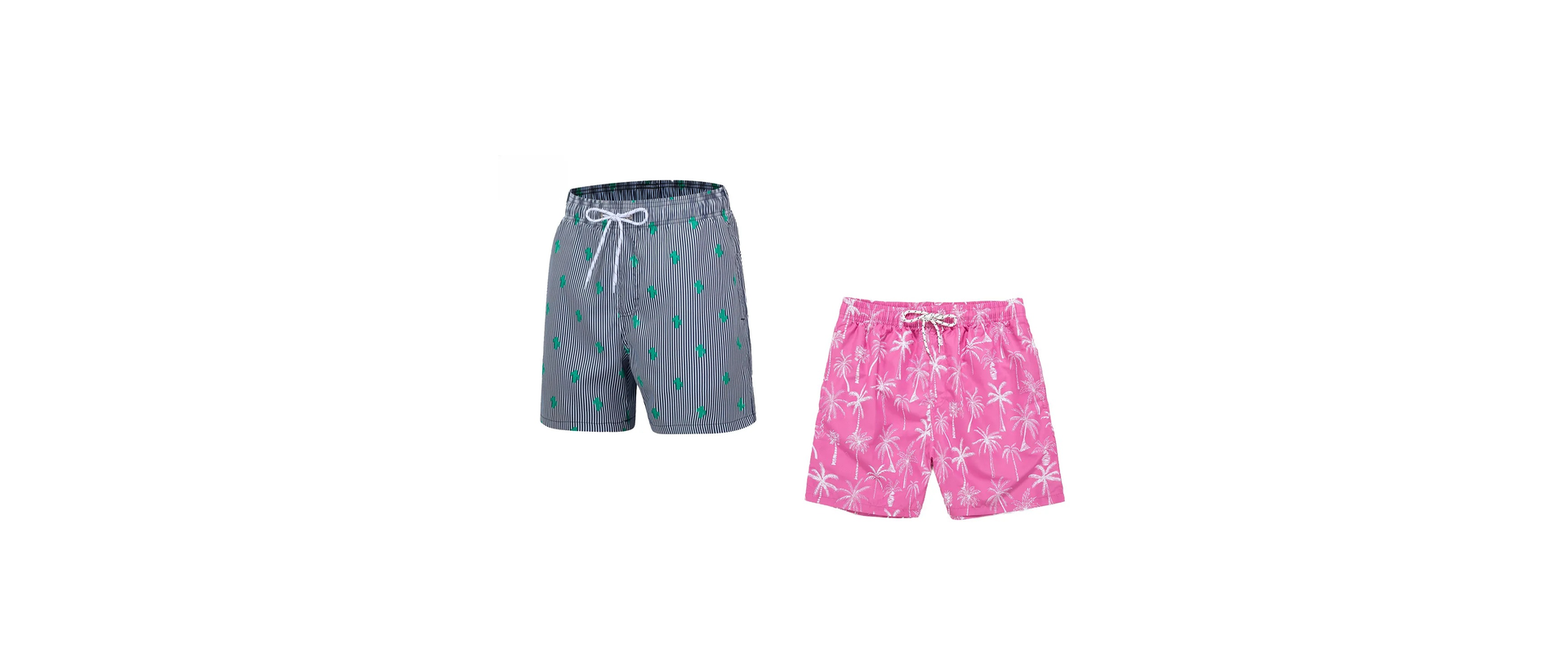
Custom Printed Beach Shorts
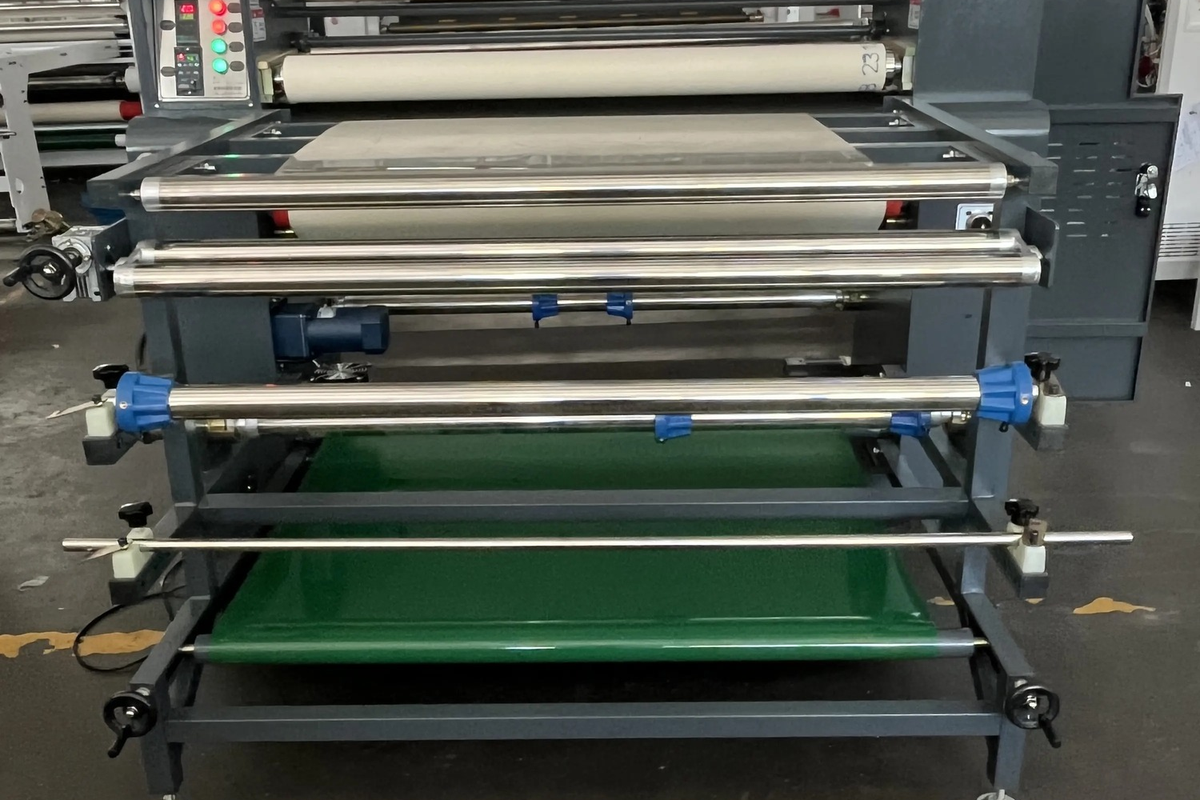
All-over repeats, a single leg graphic and contrasting printed panels give beach shorts different visual effects. Sublimation, digital printing, screen printing and heat transfer offer different routes for your artwork and selected shell.
Print options for your artwork
- All-over repeats, placement motifs or a combination of both.
- Small, medium or oversized motifs, with directional or non-directional layouts.
- Polyester, microfiber, peach skin and recycled polyester shell options.
- Printed or solid waistbands, pocket faces and contrasting panels.
- Separate printed logos, heat-transfer marks, embroidery or woven brand labels.
How the printed design changes the garment

Repeat setup
A continuous tile repeats across the fabric, creating a different distribution of motifs on each cut panel.
Panel layout
Front, back, pocket and waistband pieces can share one print or combine printed and solid areas.
Pattern scale
Small repeats show more complete motifs on a short leg. Oversized graphics place more emphasis on the cut layout.

Logo separation
A fixed logo can sit apart from the all-over pattern or occupy its own solid panel.

Seam review
A pocket can blend into a repeat or use a contrasting print. Matching a motif across seams depends on the repeat and cut layout.

Color reference
A physical color reference describes the intended palette more reliably than a screen preview. The selected fabric and print process affect the final appearance.
Printed styles and panel layouts
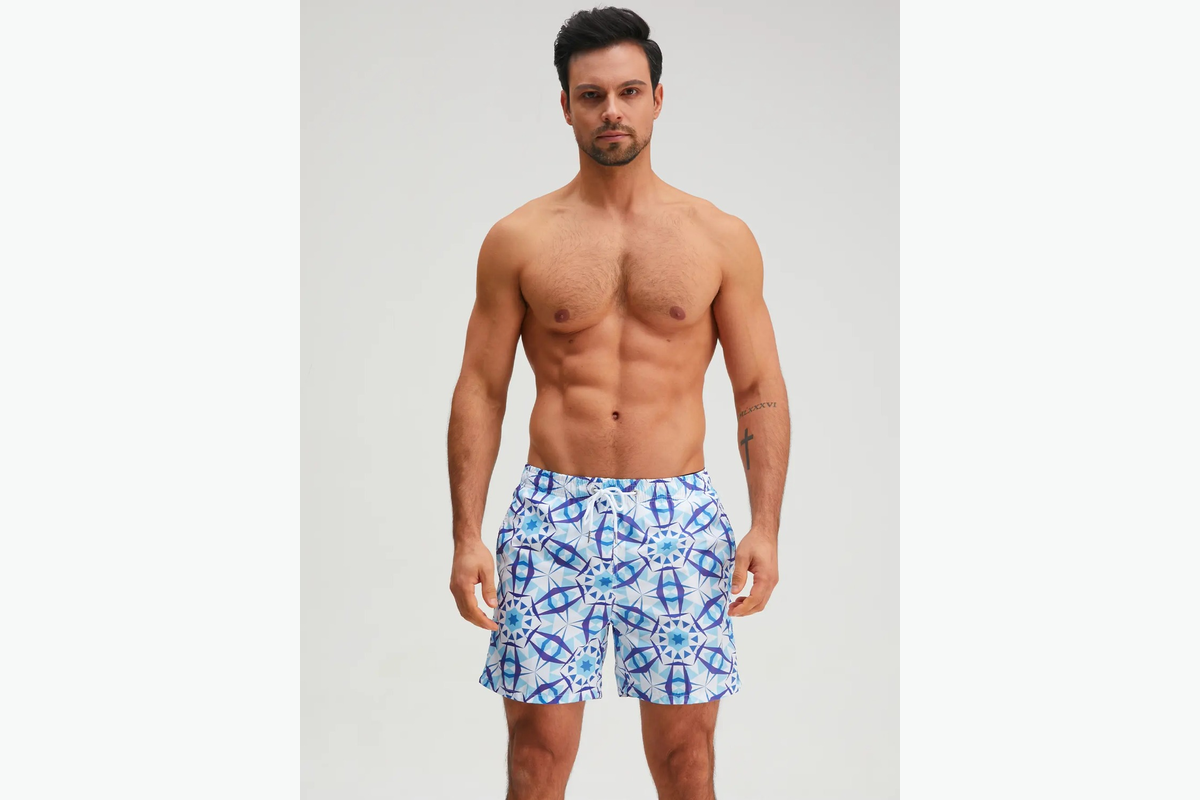
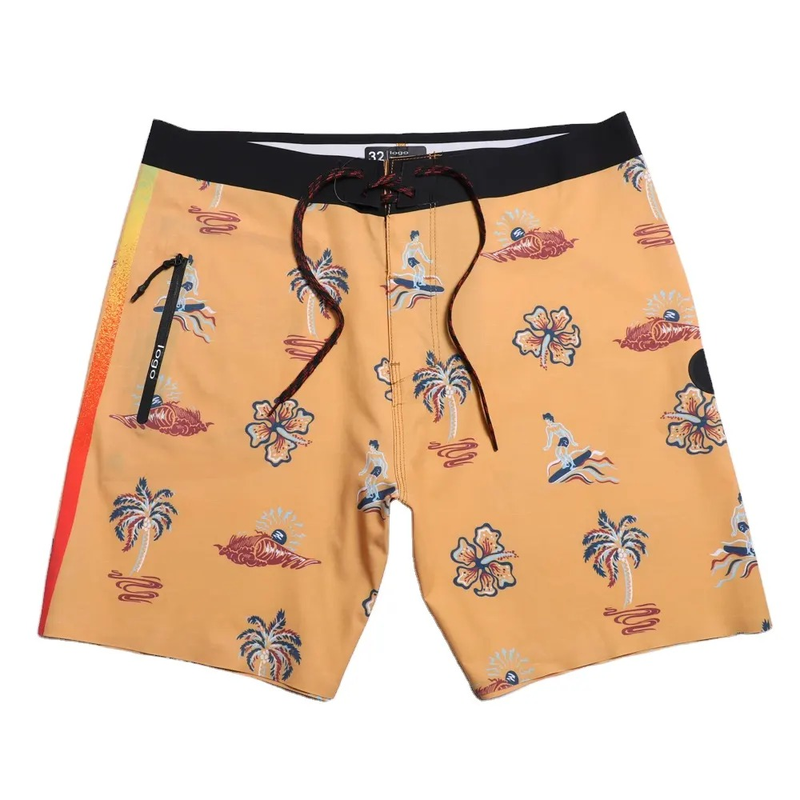
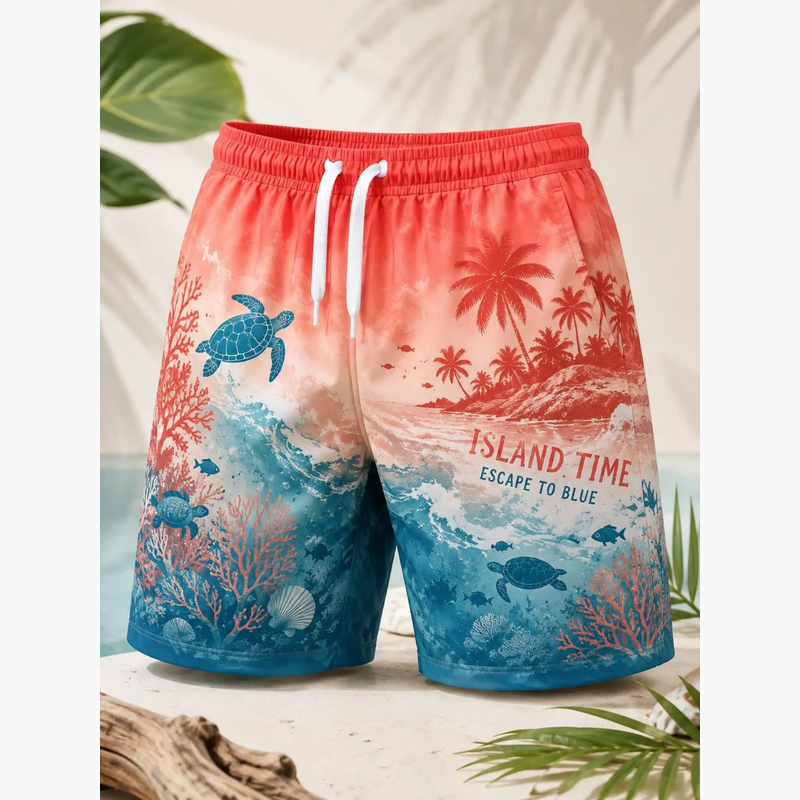
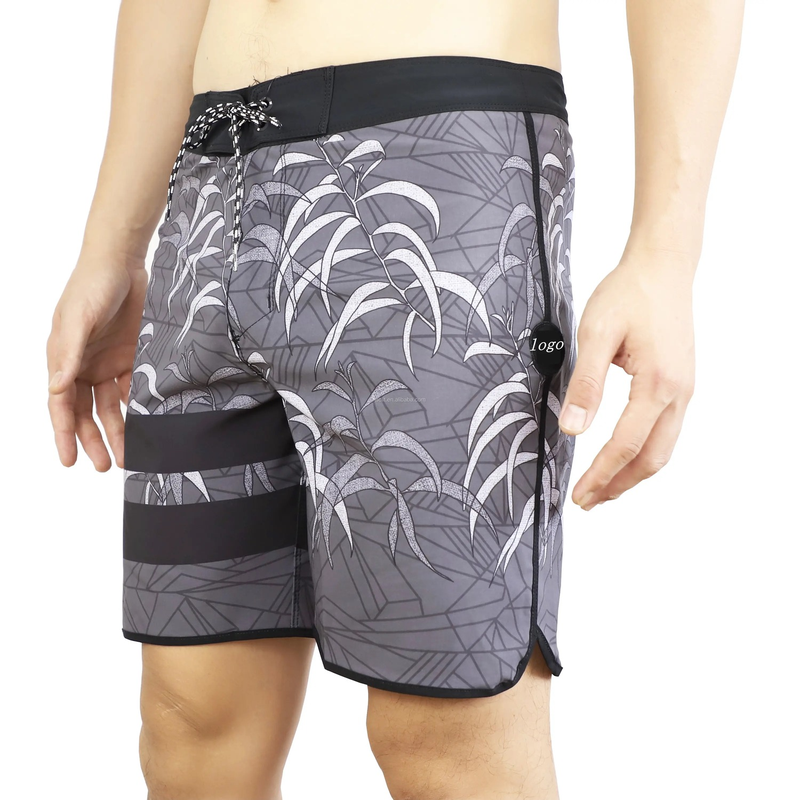
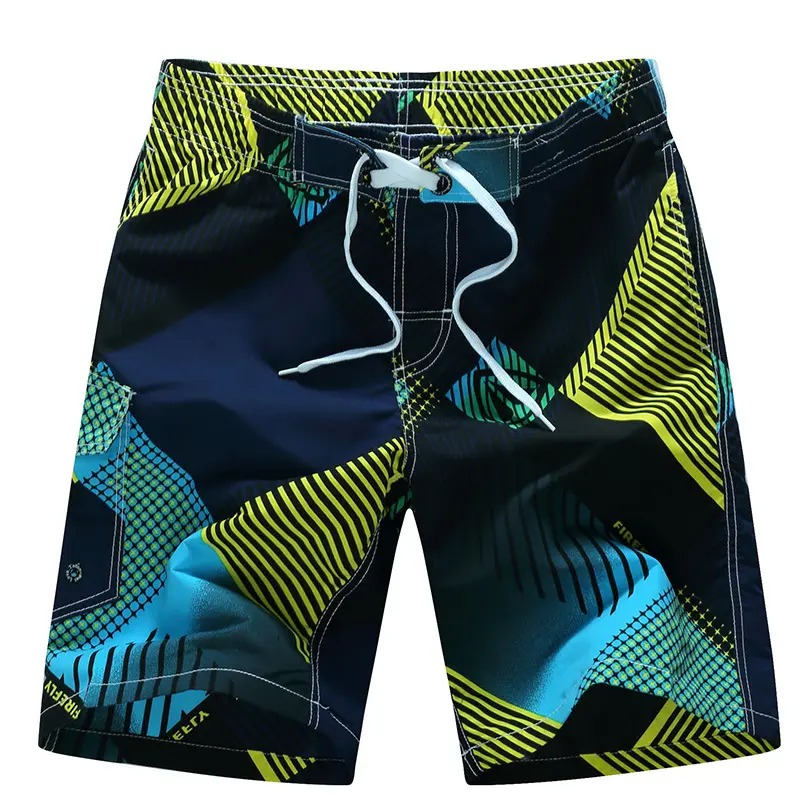
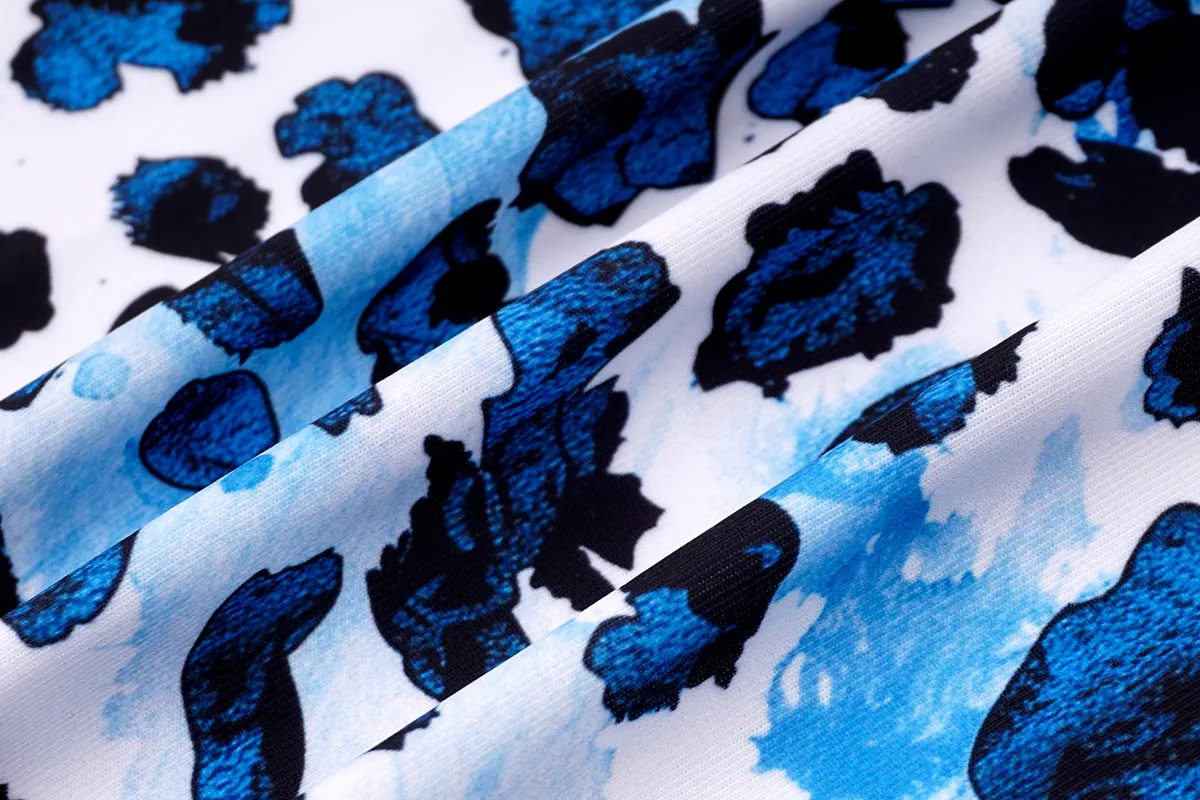
These photos show small motifs, a gradient tropical print, oversized leaves and geometric panels. Print scale and panel layout create different effects even on similar cuts.
Repeat scale, direction and colorways
-
Tile dimensions
The tile width sets how far the pattern runs across a leg panel before it repeats. The tile height sets the repeat distance down the leg. -
Motif size
A leaf printed at the same dimensions takes up more of a short leg than a long one. Enlarging the artwork changes the size of the leaf itself. -
Direction
Directional motifs can face consistently across the main panels. A non-directional repeat gives more freedom in the cut layout. -
Colorways
One repeat can be developed in different ground and accent palettes, with each artwork version identified separately.
Printing methods and fabric compatibility
-
Sublimation
Detailed multicolor artwork can cover a suitable high-polyester base. Composition and base shade affect the result. -
Digital printing
Fine lines and multicolor artwork can be reproduced when the fabric and digital print system are compatible. -
Screen printing
Separate spot colors suit bold lettering and local graphics without covering the full leg. -
Heat transfer
A transfer concentrates a colored logo or small graphic in one area. Handfeel and application conditions depend on the transfer and shell.
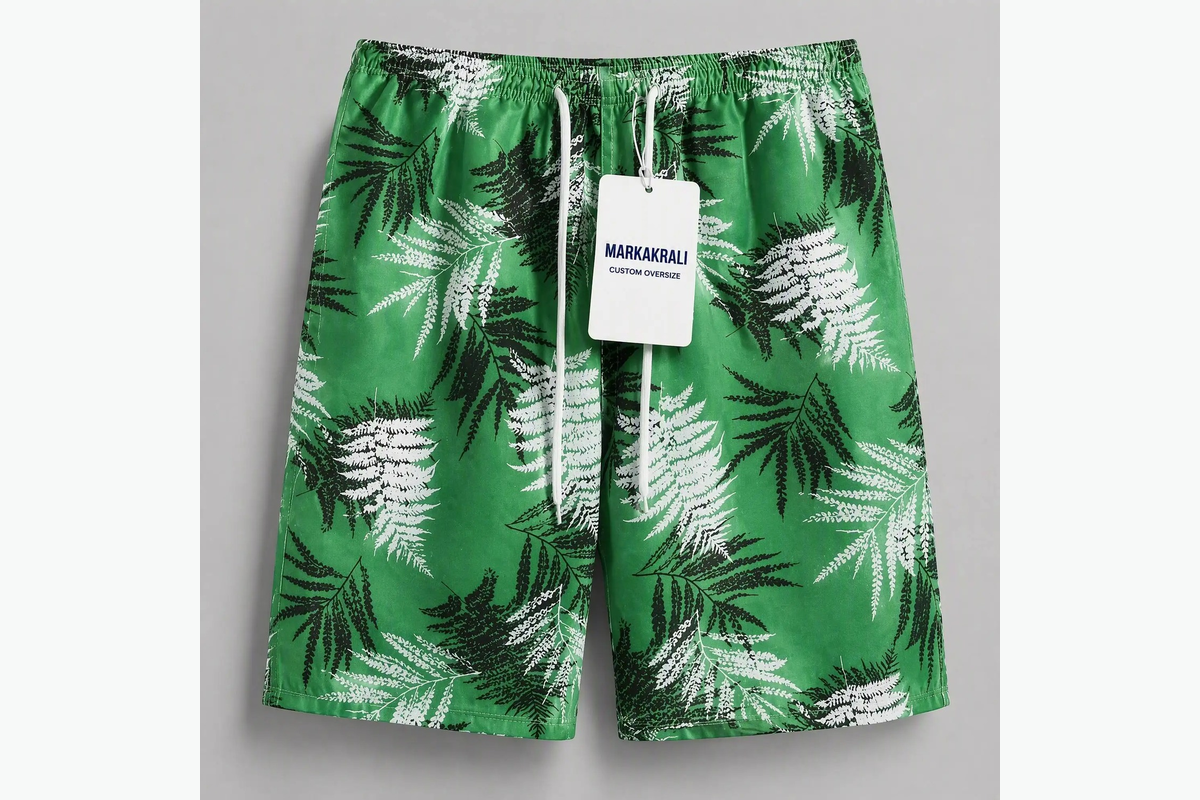
All-over and placement layouts
-
Front and back
A random repeat distributes the pattern across the panels. A placement layout holds a larger motif at a defined location. -
Pocket faces
A patch pocket can continue the body print, contrast in a solid color or carry its own graphic. -
Side seams
Stripes and large motifs can be planned around the joins. The achievable match depends on the pattern repeat, cut pieces and seam allowances. -
Waistband
Gathered elastic compresses the print into folds. A solid band or smaller repeat keeps the waist detail simpler.
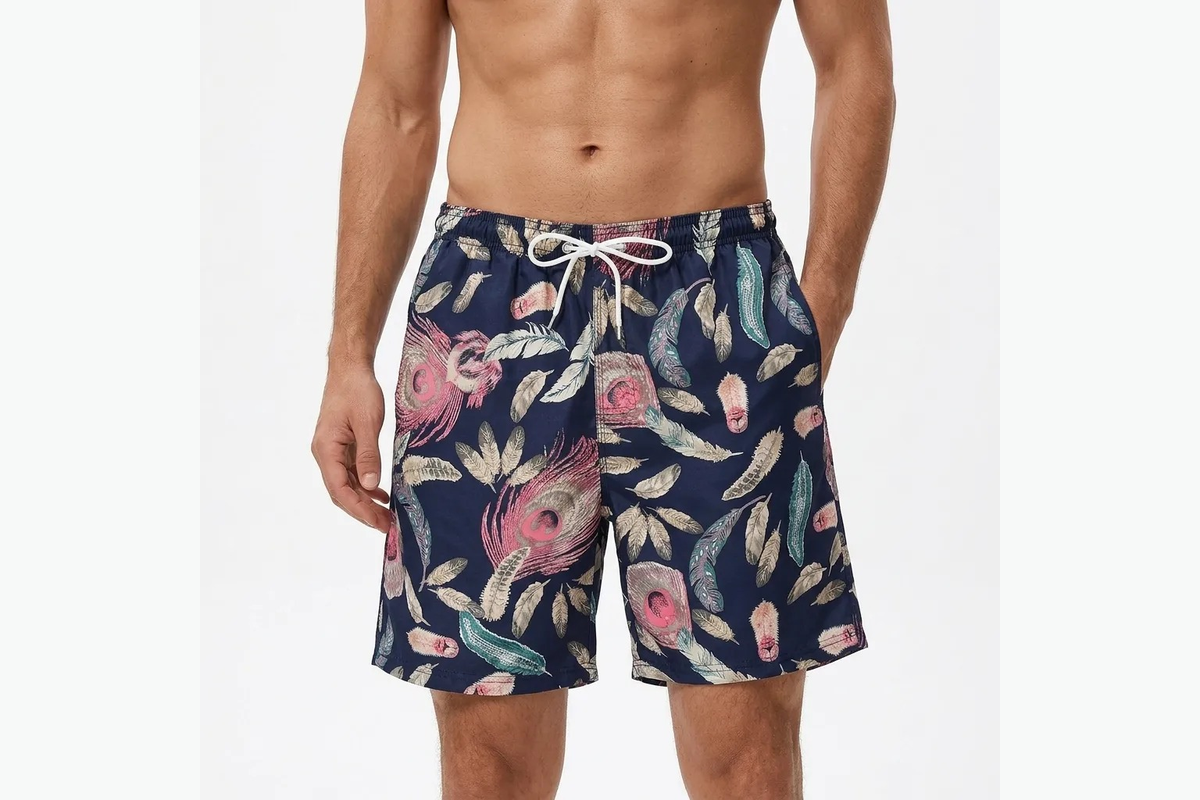
Shell shade and brand details
-
Shell shade
White, tinted and dark grounds change the available print route and the appearance of the finished colors. -
Surface finish
A smooth or peach-finished surface gives fine lines and color contrast a different appearance. -
Separate label
A woven label at the seam or waistband leaves the main graphic uninterrupted. -
Embroidered detail
Thread adds texture over a printed shell. Stitch density and backing influence the feel and drape of the decorated area.
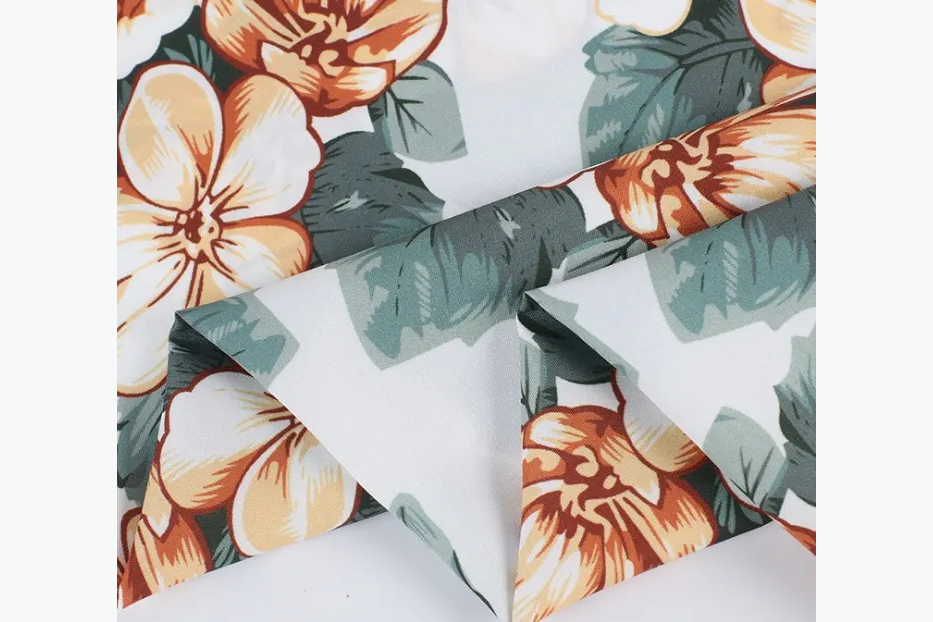
Coordinated trims and packaging
-
Solid and printed areas
A solid waist or pocket can frame a busy repeat, while a fully printed layout carries the pattern across the garment. -
Drawcord color
A matching cord blends with the ground; a contrasting cord picks up one accent from the artwork. -
Printed hang tags
The same logo or color palette can continue onto the tag without adding another graphic to the leg. -
Brand labels and bags
Woven or printed labels and custom poly bags complete the design with size and brand information.
The printed shell and matching tags
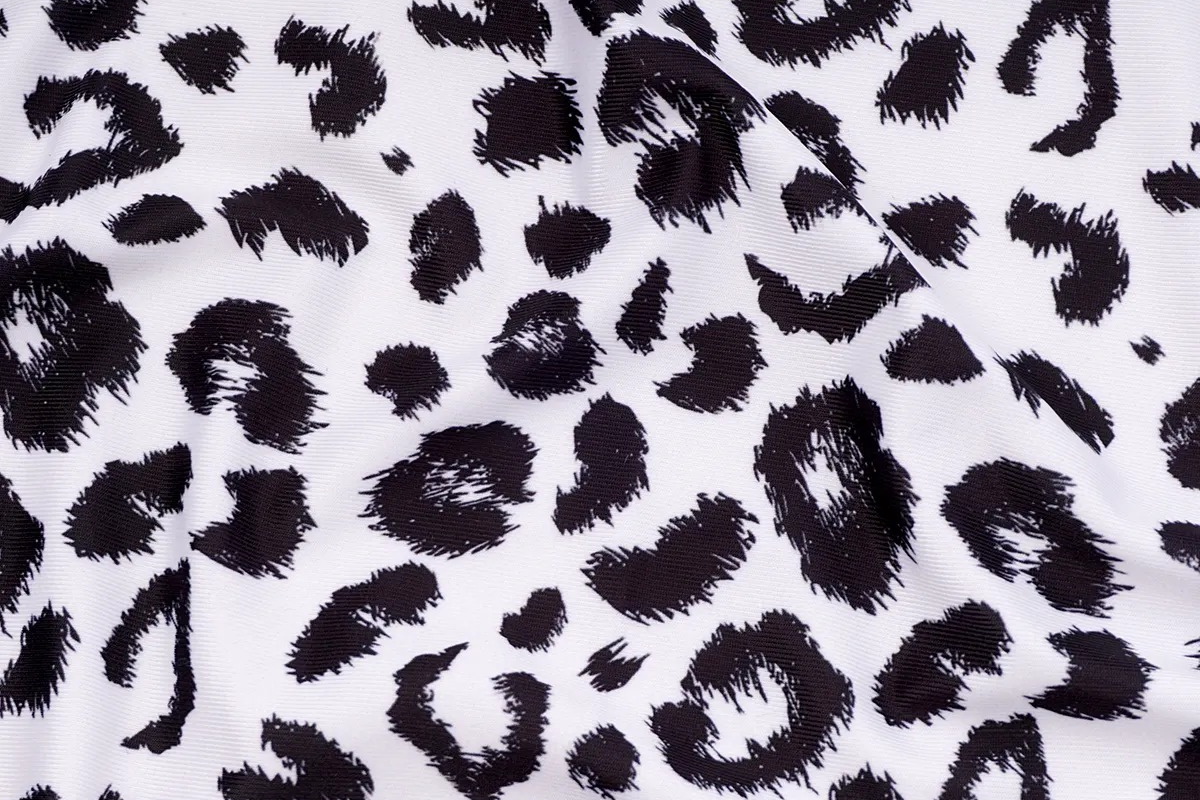
The actual base
A paper proof shows layout; a printed fabric swatch shows the surface, color and handfeel of the chosen base.
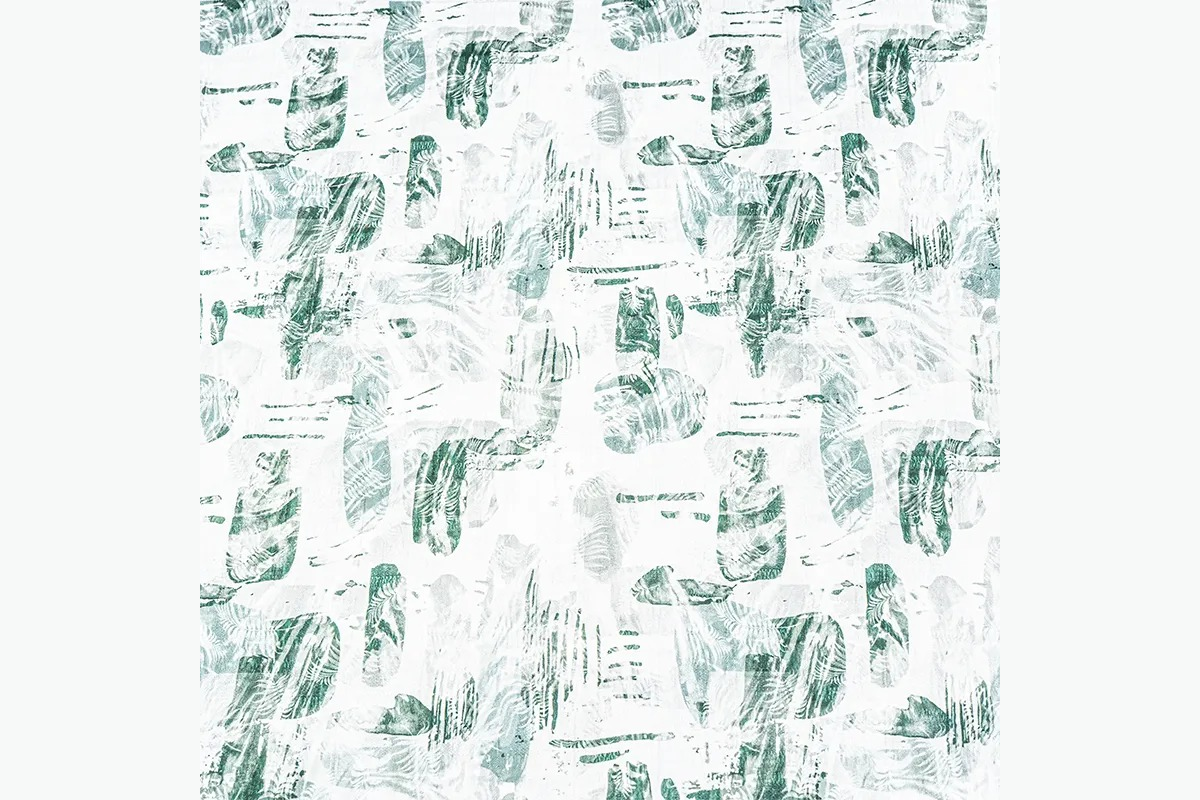
Surface and fine detail
Smooth and peach-finished fabrics can reproduce the same artwork differently, especially at fine lines and small motifs.
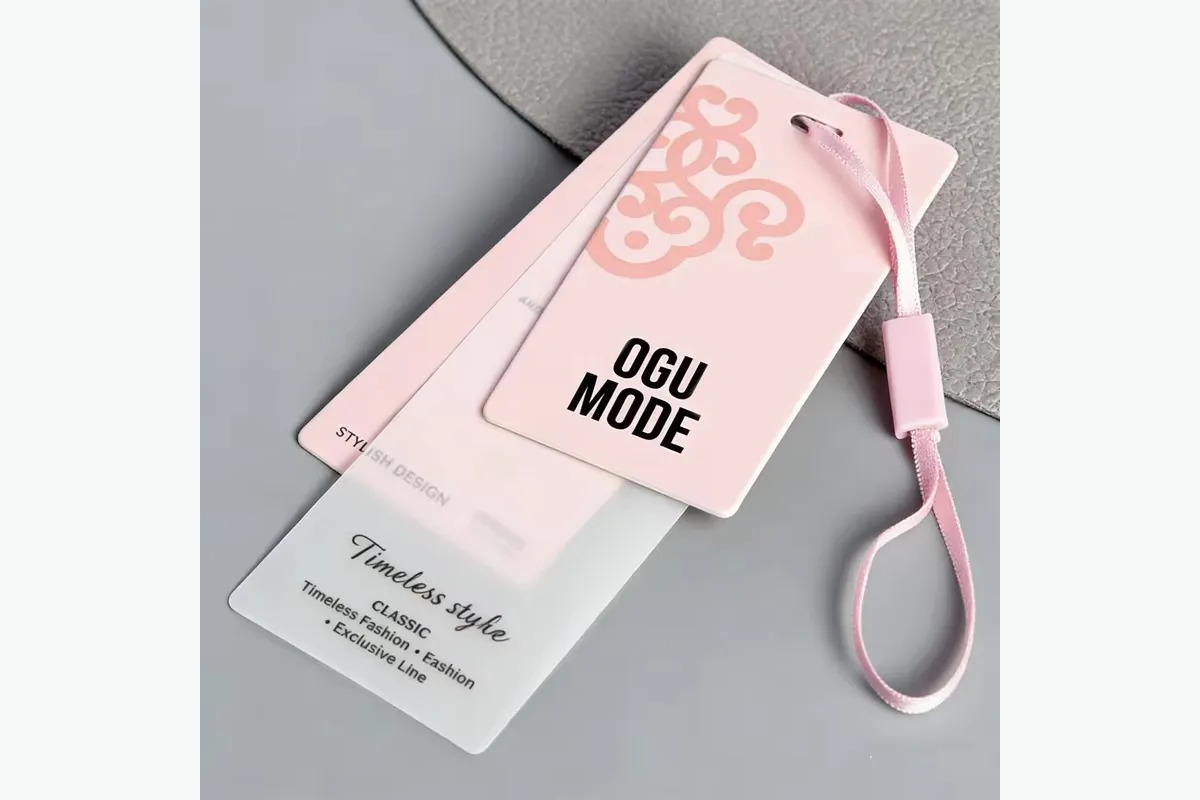
Matching a hang tag to the print
A hang tag can pick up one color or a single motif from the garment. The same artwork can look different on paper and fabric.
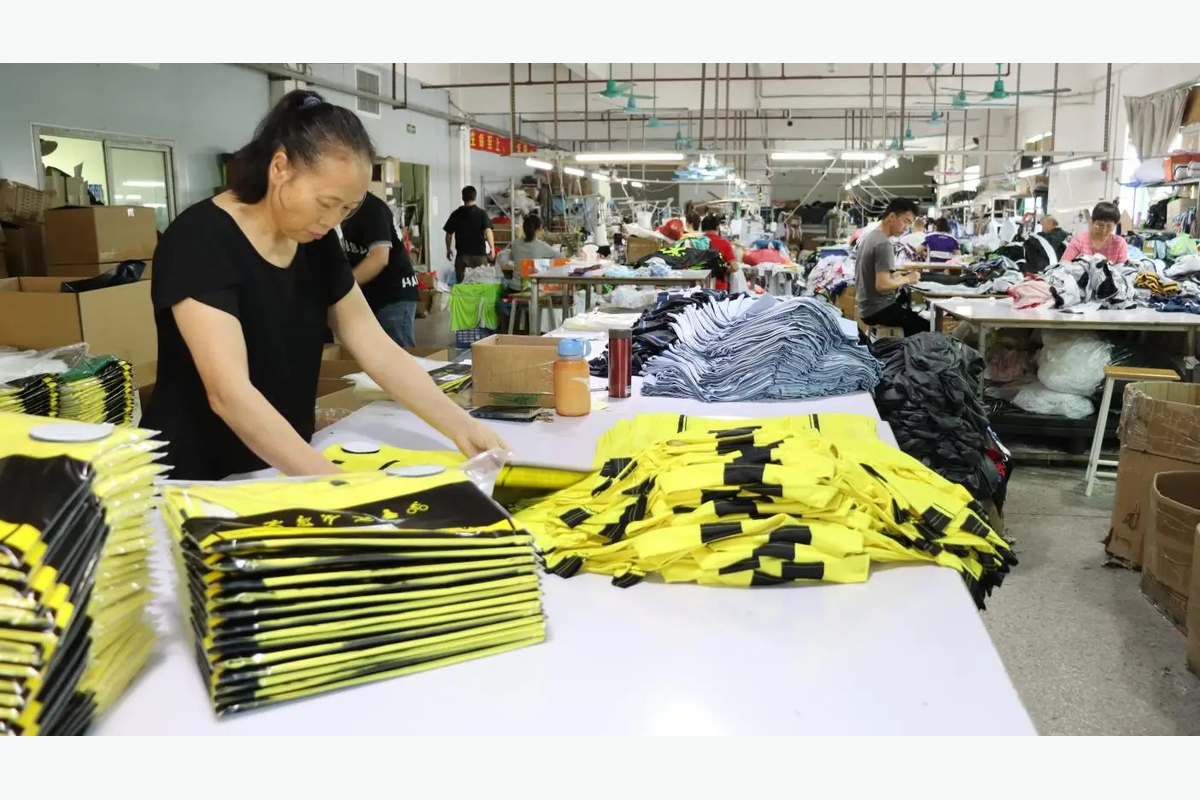
How printed panels become shorts
The print layout positions artwork relative to the cut panels. Sewing joins those panels with the pocket faces and waistband, shaping how the complete pattern appears on the finished shorts.
Develop beach shorts with your artwork
An original repeat tile gives us the scale of an all-over design. A logo file or a reference image can also be a starting point for a print on one leg.
Get a Custom Quote